

Valentin
May 20, 2026

A ticket checkout is not the top of the funnel. By the time someone reaches it, they have noticed the event, chosen a ticket type, compared the price against their night out, and moved close enough to pay. When they leave there, the organiser loses more than a web session.
They lose demand that marketing already helped create. They also lose a signal: which campaign, audience, device, ticket type, or payment step produced intent but did not turn into revenue. That is why checkout abandonment should sit beside sales pace, event profitability framework, campaign spend, and capacity in the weekly event dashboard.
Broad ecommerce research regularly shows cart abandonment sitting around the 70 percent mark, with mobile abandonment even higher. Event organisers should not copy those numbers blindly, but the pattern matters: the payment step is often where friction beats intent, which makes the ticket purchase experience a revenue issue rather than a design detail.
The biggest leaks are rarely dramatic. They are small moments that make a buyer pause: ticketing fee transparency is missing, the mobile page feels slow, the form asks for too much, the payment fails, or the platform forces an account before the sale is complete. These are costly ticketing mistakes, not minor preferences.
Those moments are especially costly for events because urgency moves quickly. A buyer may be planning with friends, checking transport, or deciding between two nights out. If the checkout adds work at that moment, the buyer can drift away without meaning to.
| Leak point | What the buyer feels | What organisers should check | Practical fix |
|---|---|---|---|
| Late fees | The price changed at the end | Fee display timing and refund clarity | Show total price early and explain what fees cover |
| Slow mobile checkout | This is taking too long | Page load, wallet support, payment load time | Cut fields and support Apple Pay / Google Pay |
| Forced account creation | I will come back later | Guest checkout rate and account prompts | Let buyers buy first and create accounts after purchase |
| Payment failure | My payment did not work | Failure codes and retry path | Offer another payment method without resetting cart |
| Weak recovery | I forgot or lost momentum | Reminder timing and recovered revenue | Send 1-hour, 24-hour, and 72-hour recovery messages |
More marketing is not always the next move. If the checkout is leaking, extra spend can pour more demand into the same broken path. Before raising ad budgets, organisers should understand their marketing budget per ticket, then separate traffic, intent, payment, and recovery.
If a ticketing setup hides these signals, the organiser is left guessing. That is a poor position when the team needs to increase ticket conversions during a launch week, final release, or high-demand presale.
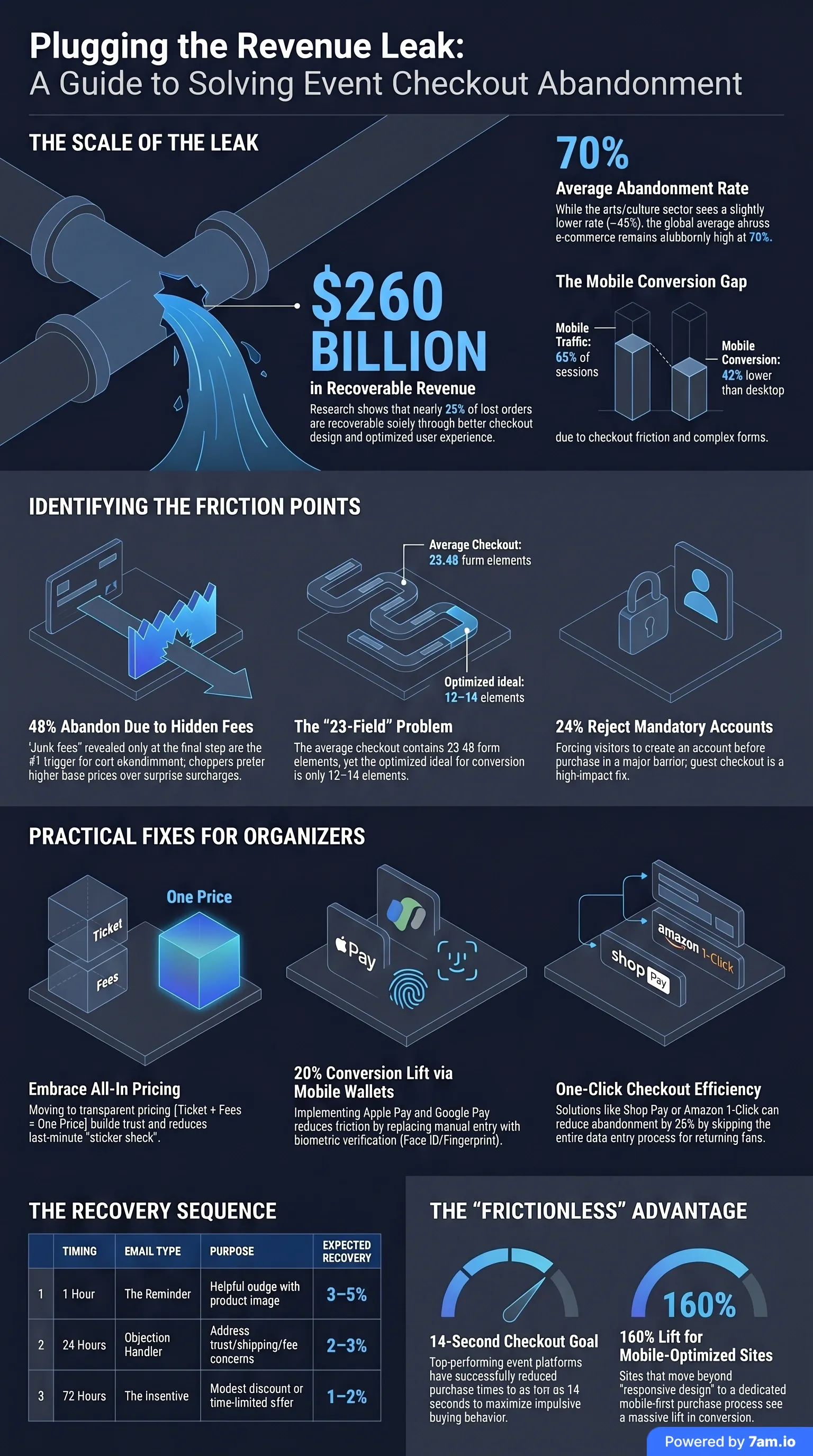
Event discovery is often mobile-first. Buyers see a story, click a link, message a friend, open the event page, and decide whether the night feels worth it. The checkout has to match that behaviour.
Long forms, tiny fields, late-loading payment widgets, and missing wallet options all create friction. On a phone, even one extra step can be enough to make the buyer wait until later. Later is where many ticket sales disappear.
The practical target is simple: fewer fields, clear price, guest checkout, wallet payments, and the right ticketing system to remember the buyer’s ticket selection. A buyer should not need to rebuild the cart after one failed payment.
Recovery should feel helpful, not desperate. The buyer has already shown intent, so the first message should make it easy to continue. The next should answer the likely objection. The final message should connect the decision to the real event timeline, using marketing hooks and angles that are truthful rather than forced.
For higher-priced events, payment flexibility can matter as much as reminder timing. Payment plans reduce the upfront decision load, while using discount codes strategically can protect launch revenue when buyers need a reason to commit now.
Checkout recovery is weaker when the ticketing platform keeps the useful signals away from the organiser. Attendee data ownership lets the team connect campaigns, ticket types, abandoned carts, recovered orders, repeat buyers, and future event interest.
For teams using 7am Tickets, the practical value is visibility. A ticketing platform should not only process payments; it should protect brand control online, help organisers understand the buyer journey, and let them act on their own audience data. Cleaner data means better launch decisions, better reminders, and better post-event follow-up.
Run a checkout audit before the next campaign goes live. Test the buyer path on a phone. Count the fields. Check when fees appear. Try a failed payment. Confirm wallet options. Then make someone on the team responsible for abandonment and recovery every week.
The goal is not to obsess over every abandoned cart. Some people browse. Some compare. Some are part of the last-week ticket sales pattern. Some never intended to buy. The goal is to protect the addressable segment: buyers who were close enough to pay but were stopped by friction, uncertainty, or timing.
Checkout abandonment is demand that reached the door and left. Event organisers should treat it as a revenue system: measure it, simplify it, recover it, and connect it to owned attendee data.
If the next campaign creates more checkout starts but not more sales, the answer may not be louder marketing. It may be a cleaner path to payment, plus fewer slow ticket payments after the sale.
Explore More
View All